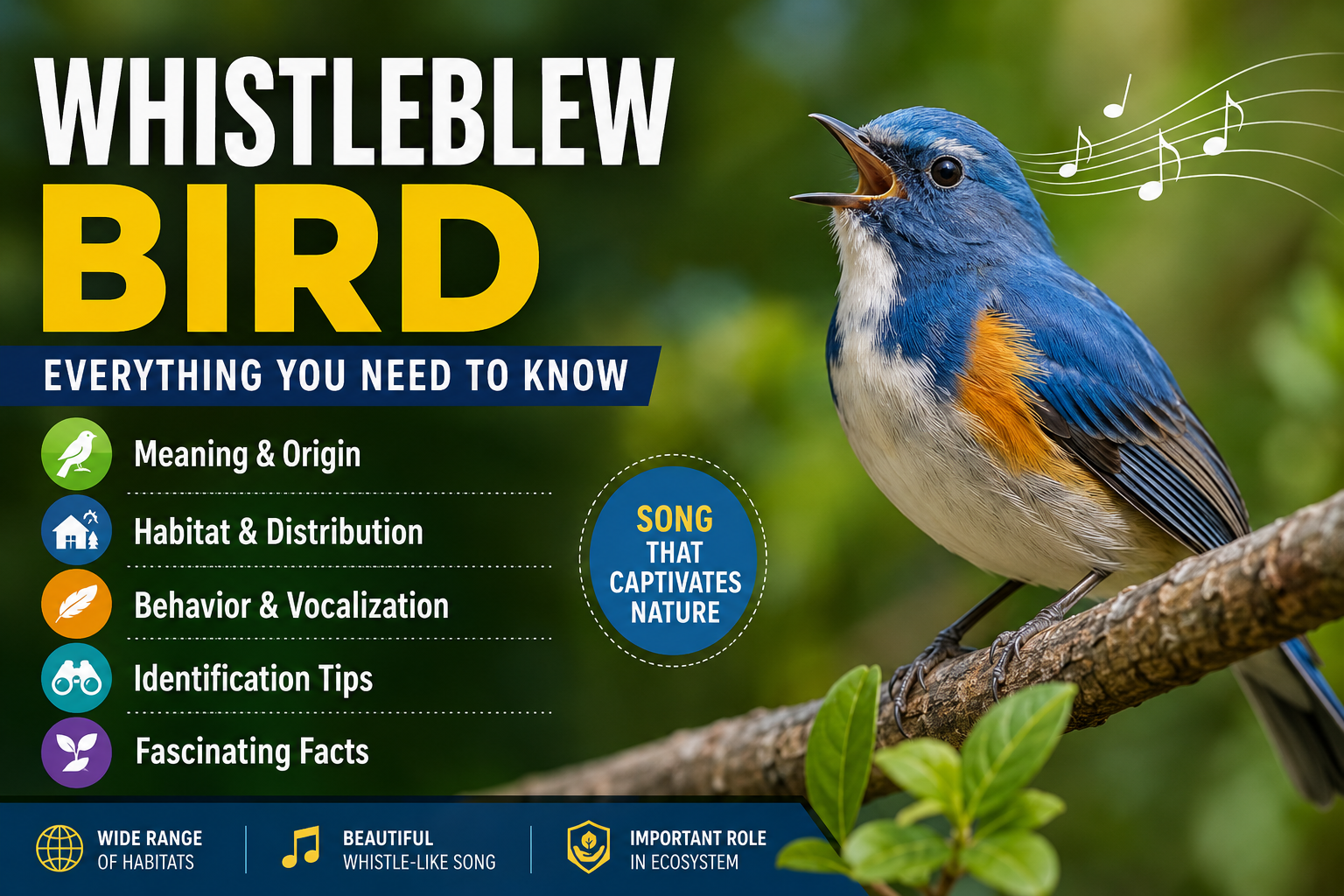
The term whistleblew bird has become increasingly popular online, leaving many people curious about its meaning and origin. Bird enthusiasts, nature lovers, and casual internet users often search for this unusual phrase hoping to identify a bird known for its distinctive whistling sounds.
Unlike well-known bird species with established scientific names, the whistleblew bird is somewhat mysterious. In many cases, the term appears to be a nickname, regional expression, or descriptive phrase used for birds that produce clear, whistle-like calls.
This guide explores everything you need to know about the whistleblew bird, including its possible meaning, birds commonly associated with the name, habitats, behavior, identification methods, and interesting facts about whistling birds around the world.
What Is a Whistleblew Bird?
The whistleblew bird is not currently recognized as an official bird species in scientific classification. Instead, the term is often used informally to describe birds that are known for producing loud, clear, and musical whistle sounds.
People may use the name whistleblew bird for several reasons:
- A local nickname passed down through generations
- A descriptive name based on the bird’s call
- A variation or misspelling of another bird name
- A term used in folklore, storytelling, or online discussions
Because many birds are identified by their songs, it is common for communities to create names inspired by the sounds they hear in nature.
Why Is the Whistleblew Bird Popular?
The growing popularity of the term can be linked to increased interest in birdwatching and wildlife content online.
Unique Bird Sounds
Birds that whistle often create memorable sounds that stand out from other natural noises. These sounds can be surprisingly musical and may resemble human whistling.
Social Media Influence
Videos featuring unusual bird calls frequently go viral. As viewers attempt to identify the birds, unique names such as whistleblew bird begin appearing in searches and discussions.
Growing Interest in Birdwatching
More people are spending time outdoors and developing an interest in identifying birds by their songs rather than their appearance alone.
Birds Commonly Linked to the Whistleblew Bird Name
Several bird species are known for producing whistle-like songs and may be associated with the whistleblew bird name.
Whistling Thrush
Whistling Thrush species are famous for their rich and melodious calls.
Characteristics include:
- Dark blue or black plumage
- Strong and clear whistles
- Preference for streams and forested habitats
- Active behavior near water sources
Their songs are often so musical that people mistake them for human whistles.
Golden Whistler
The Golden Whistler is another bird commonly associated with whistling sounds.
Notable features include:
- Bright yellow coloring in males
- Powerful vocal abilities
- Forest and woodland habitats
- Distinctive territorial songs
Despite their small size, they can produce remarkably loud calls.
Northern Mockingbird
The Northern Mockingbird is famous for its ability to imitate sounds.
It can mimic:
- Other birds
- Human-made noises
- Whistles
- Environmental sounds
This impressive vocal range makes it one of the most recognizable songbirds.
Blackbird Species
Many blackbirds create flute-like whistles that can travel long distances.
Birdwatchers often hear these birds before seeing them because their songs are so noticeable.
Habitat and Distribution
Birds known for whistling calls can be found in a variety of habitats around the world.
Forest Habitats
Forests provide excellent conditions for sound transmission.
Whistling birds use their calls to:
- Attract mates
- Defend territories
- Communicate with family groups
Dense vegetation often makes vocal communication more important than visual signals.
Wetland Habitats
Wetlands support numerous bird species that rely on calls to communicate across reeds, grasses, and water.
Mountain Regions
Mountain environments help carry bird songs over long distances.
Many famous whistling birds are found in hills and mountainous forests where their songs echo through valleys.
Urban Environments
Several adaptable species thrive in cities, gardens, and parks.
Urban residents often hear whistling birds during the early morning hours when traffic noise is minimal.
Why Birds Produce Whistling Sounds
Bird songs serve several important purposes in nature.
Attracting Mates
One of the main reasons birds sing is to attract potential mates.
A strong and complex song often signals:
- Good health
- Physical fitness
- Territory ownership
- Genetic quality
Defending Territory
Birds use whistles and songs to warn rivals that a territory is already occupied.
This reduces physical conflicts and helps maintain boundaries.
Communication
Birds communicate information about:
- Food availability
- Predators
- Nest locations
- Group movements
Different calls often carry different meanings.
Species Recognition
Each species develops unique vocal patterns that help individuals recognize members of their own kind.
How Birds Create Whistling Sounds
Birds do not use vocal cords in the same way humans do.
Instead, they possess a specialized organ called the syrinx.
The syrinx allows birds to:
- Produce multiple notes simultaneously
- Create complex melodies
- Mimic sounds
- Generate loud whistles despite their small size
This remarkable adaptation explains the incredible variety of bird songs found in nature.
How to Identify a Whistling Bird
Identifying a bird by sound can be challenging but rewarding.
Listen Carefully
Pay attention to:
- Pitch
- Rhythm
- Repetition
- Duration
Every species has a unique vocal signature.
Observe Physical Features
Look for details such as:
- Body size
- Feather colors
- Beak shape
- Tail length
Visual clues help confirm identification.
Watch Behavior
Behavior often provides valuable hints.
Notice:
- Feeding habits
- Flight patterns
- Preferred perches
- Social interactions
Record the Sound
A smartphone recording can help you compare the bird’s song with online databases and bird identification tools.
Use Bird Identification Apps
Modern birding apps can analyze bird calls and suggest possible species based on sound patterns.
Interesting Facts About Whistling Birds
Some Birds Learn Songs Throughout Life
Certain species continue expanding their song repertoire as they age.
Birds Have Regional Dialects
Bird populations living in different locations often develop unique versions of the same song.
Songs Can Travel Long Distances
In ideal conditions, bird whistles can carry hundreds of meters through forests and open landscapes.
Males Usually Sing More
Male birds are often responsible for the most elaborate songs, especially during breeding seasons.
Birds Can Mimic Human Sounds
Some species can imitate whistles, speech, alarms, and mechanical noises with surprising accuracy.
Birdwatching Tips for Finding Whistling Birds
If you want to observe birds famous for whistle-like calls, these tips can help.
Visit During Early Morning
The period shortly after sunrise is known as the dawn chorus.
This is often the best time to hear bird songs.
Choose Quiet Locations
Natural environments with little background noise make bird calls easier to detect.
Bring Binoculars
Quality binoculars help you identify birds from a distance without disturbing them.
Be Patient
Birdwatching requires observation and careful listening.
Remaining still often increases your chances of spotting shy species.
Learn Local Birds
Understanding common birds in your area makes identification much easier.
Conservation and Protection
Many songbirds face challenges due to habitat destruction and environmental changes.
Major threats include:
- Deforestation
- Urban expansion
- Pollution
- Climate change
- Invasive species
Conservation efforts focus on protecting natural habitats and preserving biodiversity.
Individuals can help by:
- Planting native vegetation
- Providing clean water sources
- Avoiding harmful pesticides
- Supporting conservation programs
- Creating bird-friendly gardens
These simple actions can make a meaningful difference for local bird populations.
FAQ
What is a whistleblew bird?
A whistleblew bird is generally considered an informal name for a bird known for producing whistle-like calls. It is not an officially recognized scientific species.
Is whistleblew bird a real species?
No. There is currently no bird species officially classified as the whistleblew bird.
Why do birds whistle?
Birds whistle to attract mates, defend territories, communicate with other birds, and identify members of their species.
Which birds are known for whistling sounds?
Whistling Thrushes, Golden Whistlers, Mockingbirds, and several Blackbird species are well known for their whistle-like songs.
How can I identify a whistling bird?
Listen to the song pattern, observe physical features, record the sound, and compare it with bird identification resources.
Where are whistling birds found?
Whistling birds live in forests, wetlands, mountains, grasslands, parks, and urban environments around the world.
Do birds have different song dialects?
Yes. Many bird populations develop regional variations in their songs, similar to human accents.
Conclusion
The whistleblew bird remains an intriguing term that captures the imagination of bird lovers and curious readers alike. Although it is not an officially recognized species, it is commonly associated with birds that produce beautiful whistle-like songs.
From Whistling Thrushes and Golden Whistlers to Mockingbirds and Blackbirds, nature offers countless examples of birds whose melodies inspire fascination and admiration. Understanding these birds and their vocal abilities deepens our appreciation for wildlife and the complex ways animals communicate.
The next time you hear a clear whistle echoing through a forest, garden, or park, take a moment to listen closely. You may discover a remarkable bird whose song has inspired yet another memorable name in the rich and diverse world of birdwatching.