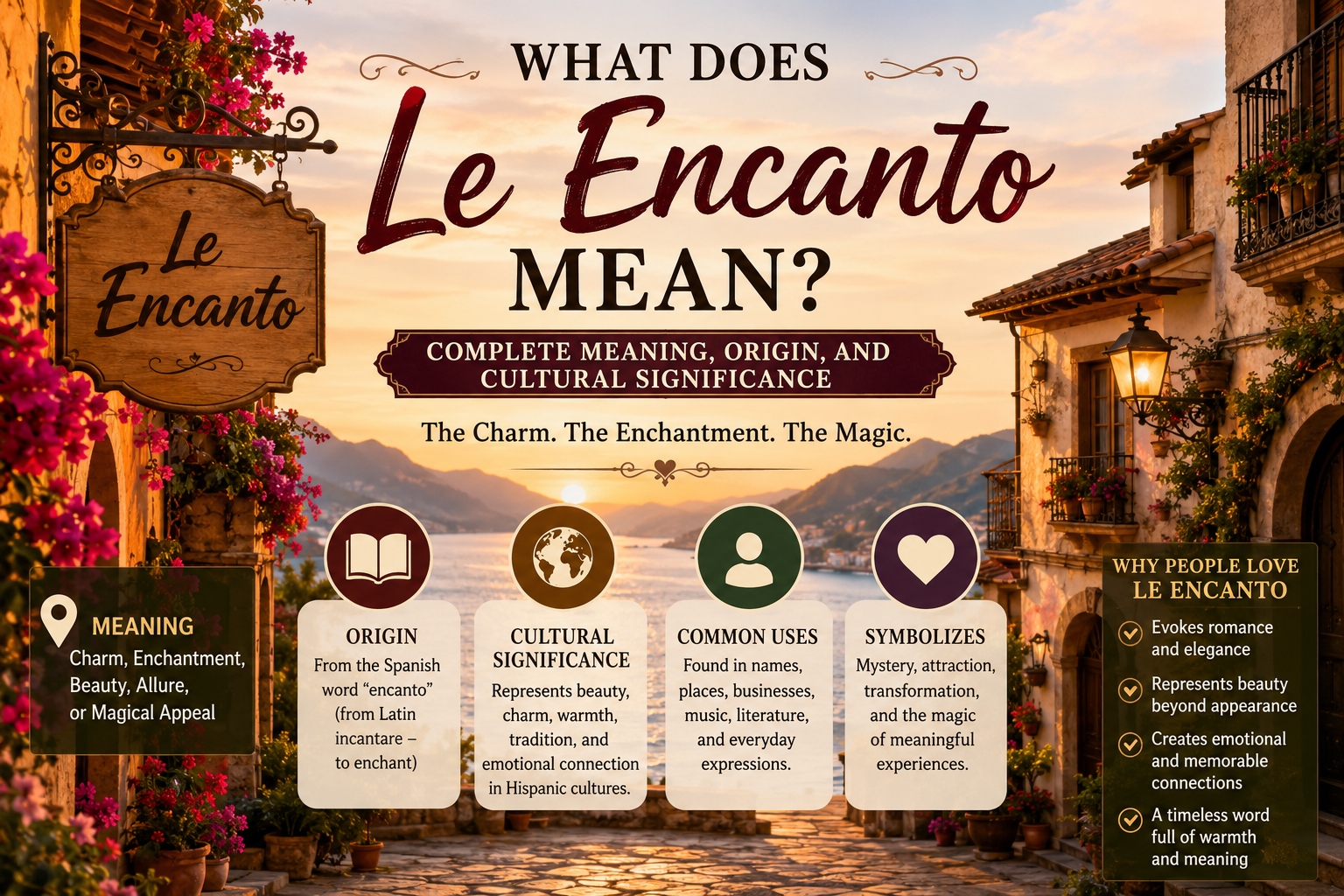
Many people searching online ask, what does le encanto mean? The phrase appears in hotel names, restaurants, songs, social media posts, and conversations about Spanish culture. Although it sounds beautiful and romantic, its exact meaning depends on grammar, context, and cultural interpretation.
In general, people use “Le Encanto” to refer to charm, enchantment, beauty, or magical appeal. However, standard Spanish grammar typically uses “El Encanto” instead. Understanding the difference helps explain why the phrase carries such strong emotional and cultural significance.
This guide explores the meaning of “Le Encanto,” its origins, common uses, symbolism, and how native Spanish speakers interpret the expression.
What Does Le Encanto Mean? A Quick Answer
The phrase Le Encanto is commonly understood as:
- The charm
- The enchantment
- The magic
- The allure
- The fascination
From a grammatical standpoint, the proper Spanish expression is usually El Encanto, since encanto is a masculine noun.
People still use Le Encanto in business names, artistic projects, and branding because it sounds elegant and memorable. In everyday understanding, most readers interpret it as meaning “the enchantment” or “the charm.”
Understanding the Word Encanto
The key to understanding the phrase lies in the word encanto itself.
In Spanish, encanto refers to:
- Charm
- Delight
- Fascination
- Beauty
- Enchantment
- Personal charisma
- Magical attraction
The term originates from the Latin word incantare, which means to enchant or cast a spell. Over time, its meaning expanded beyond literal magic to include emotional attraction, beauty, and pleasant experiences.
For example:
- La ciudad tiene mucho encanto.
- The city has a lot of charm.
- Su personalidad es un encanto.
- Her personality is delightful.
- El lugar está lleno de encanto.
- The place is full of enchantment.
The word remains one of the most expressive terms in the Spanish language because it combines beauty, emotion, and mystery.
Is Le Encanto Grammatically Correct in Spanish?
Technically, no.
Traditional Spanish grammar prefers El Encanto rather than Le Encanto.
Here’s why:
- El means “the” for masculine singular nouns.
- Encanto is a masculine noun.
Therefore:
El Encanto = The Enchantment or The Charm
The word le serves a different purpose in Spanish. It functions as an indirect object pronoun, meaning:
- To him
- To her
- To you (formal)
Examples include:
- Le di un regalo.
- I gave him a gift.
- Le gusta la música.
- She likes music.
Because of this, Le Encanto is not usually considered standard Spanish grammar. Nevertheless, people still recognize its intended meaning when it appears in names or creative works.
Why Do People Use Le Encanto Instead of El Encanto?
Despite the grammatical difference, the phrase remains popular for several reasons.
Branding and Marketing Appeal
Businesses often choose names that sound sophisticated and memorable.
The phrase evokes ideas such as:
- Luxury
- Romance
- Elegance
- Beauty
- Mystery
Hotels, resorts, restaurants, and boutiques frequently use variations of the word encanto to create an emotional connection with customers.
Influence From French
In French, le means the.
People familiar with French sometimes assume that Le Encanto naturally means The Enchantment, even though it combines elements from two different languages.
This linguistic blending is common in branding and artistic expression.
Creative Freedom
Artists and writers often prioritize sound and symbolism over strict grammatical rules.
Using Le Encanto can create:
- A unique identity
- A romantic atmosphere
- A memorable title
- An international appeal
For many audiences, the emotional meaning matters more than perfect language structure.
The Cultural Importance of Encanto in Spanish-Speaking Communities
The concept of encanto carries deep cultural significance throughout Latin America and Spain.
It represents more than physical beauty.
Instead, it combines:
- Warmth
- Personality
- Hospitality
- Wonder
- Spiritual connection
- Natural beauty
People often use the term to describe things that create lasting emotional impressions.
Personal Charm and Charisma
One of the most common uses of encanto relates to personality.
When someone says:
“Tiene mucho encanto.”
They mean:
“They have a lot of charm.”
This refers not only to physical attractiveness but also to:
- Kindness
- Confidence
- Grace
- Friendliness
- Positive energy
In Hispanic culture, personal warmth often matters more than appearance alone.
Natural Beauty and Scenic Places
Travel guides frequently describe destinations as possessing encanto.
Examples include:
- Historic villages
- Coastal towns
- Mountain landscapes
- Colonial neighborhoods
- Traditional markets
A place with encanto offers authenticity and emotional appeal rather than modern luxury alone.
Many tourism campaigns use the word because it immediately suggests beauty and memorable experiences.
Mystical and Folkloric Meanings
The original connection between encanto and magic remains visible in Latin American folklore.
Traditional stories include:
- Enchanted lakes
- Magical forests
- Hidden treasures
- Supernatural beings
- Sacred mountains
In some regions, an encanto may even refer to a mystical location believed to possess spiritual power.
These legends combine Indigenous traditions with Spanish influences, creating rich cultural narratives that continue today.
Encanto in Literature and Poetry
Spanish literature has long embraced the idea of enchantment.
Poets and writers use encanto to describe:
- Romantic love
- Natural beauty
- Divine inspiration
- Emotional fascination
The term often symbolizes experiences that cannot be fully explained through logic.
Expressions like:
“Cayó bajo su encanto.”
Translate as:
“He fell under her charm.”
This metaphor remains popular in both classical and modern Spanish writing.
Modern Popularity of the Word Encanto
In recent years, global interest in the word has increased dramatically.
People associate encanto with:
- Family traditions
- Magic
- Cultural identity
- Personal gifts
- Emotional connections
The universal appeal lies in its positive meanings.
Unlike words that focus solely on beauty, encanto suggests a deeper form of attraction that involves personality, emotion, and mystery.
Common Spanish Expressions Using Encanto
Many everyday expressions include the word.
Tener Encanto
Meaning:
To possess charm or attractiveness.
Example:
Ese pequeño pueblo tiene mucho encanto.
Translation:
That small town has a lot of charm.
Estar Encantado
Meaning:
To be delighted or pleased.
Example:
Estoy encantado de conocerte.
Translation:
I am delighted to meet you.
Quedar Encantado
Meaning:
To be extremely satisfied or impressed.
Example:
Quedé encantado con el viaje.
Translation:
I was delighted with the trip.
Bajo Su Encanto
Meaning:
Under someone’s charm or influence.
This phrase commonly appears in romantic contexts.
Symbolism Behind the Idea of Enchantment
The meaning of encanto extends beyond language into symbolism.
Mystery
Enchantment suggests that some experiences cannot be fully explained.
People often describe extraordinary places as having a special charm.
Attraction
Humans naturally respond to beauty and authenticity.
Encanto represents emotional magnetism rather than superficial appearance.
Transformation
Traditional stories use enchantment as a symbol of change and growth.
Life experiences themselves can become transformative forms of magic.
Spiritual Connection
Many cultures associate beauty with deeper spiritual truths.
Encanto reflects the belief that genuine charm comes from within.
Places and Businesses Named Le Encanto
The phrase frequently appears in commercial settings.
Examples include:
Hotels and Resorts
Luxury properties often adopt the name to communicate:
- Romance
- Relaxation
- Elegance
- Scenic beauty
Restaurants
Restaurants use the term to suggest:
- Warm hospitality
- Traditional culture
- Memorable dining experiences
Residential Communities
Neighborhoods and developments sometimes incorporate the word to emphasize their unique atmosphere and character.
The positive emotional associations make it a powerful branding tool.
The Difference Between Charm, Enchantment, and Magic
English translations vary depending on context.
Charm
Charm refers to:
- Personal appeal
- Friendliness
- Grace
- Pleasant characteristics
Enchantment
Enchantment suggests:
- Wonder
- Fascination
- Emotional captivation
Magic
Magic implies:
- Supernatural power
- Mystical experiences
- Extraordinary events
The Spanish word encanto can include aspects of all three meanings.
Why People Search for What Does Le Encanto Mean
People encounter the phrase in many different places, including:
- Hotel names
- Restaurant brands
- Social media captions
- Song lyrics
- Literature
- Travel destinations
- Tattoos
- Artistic works
Their questions typically include:
- Is Le Encanto correct Spanish?
- What is the difference between Le Encanto and El Encanto?
- Does the phrase mean magic?
- What cultural significance does it hold?
Understanding both grammar and cultural context provides a complete answer.
Frequently Asked Questions
What does Le Encanto mean in English?
Most people understand it to mean the charm, the enchantment, or the magic, although standard Spanish grammar would usually use El Encanto.
Is Le Encanto proper Spanish?
Not traditionally. The grammatically correct form is generally El Encanto because encanto is a masculine noun.
What does encanto mean by itself?
Encanto means:
- Charm
- Beauty
- Fascination
- Delight
- Enchantment
- Magical attraction
The exact meaning depends on context.
Why do businesses use Le Encanto?
Businesses often choose the phrase because it sounds elegant, romantic, memorable, and emotionally appealing.
Is encanto connected to magic?
Yes. The word originally referred to enchantment and magical influence, although modern usage frequently relates to beauty and personal charm.
What is the difference between El Encanto and Le Encanto?
El Encanto is standard Spanish and means The Enchantment or The Charm.
Le Encanto is generally a stylized or creative variation used in branding or artistic contexts.
Conclusion
If you have ever wondered what does le encanto mean, the simple answer is that people generally interpret it as the charm, the enchantment, or the magical allure of someone or something. While standard Spanish grammar favors El Encanto, the alternative form continues to appear in branding, art, and popular culture because of its elegant and romantic sound.
The word encanto itself represents far more than beauty. It captures personality, warmth, mystery, fascination, and emotional connection. Whether describing a person, a place, or an experience, the concept reminds us that true charm comes from qualities that go beyond appearances and leave a lasting impression.