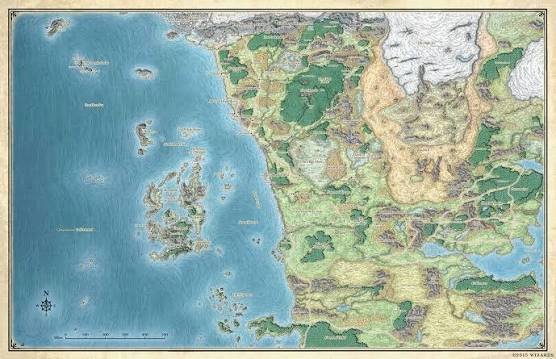
The Faerûn map is one of the most recognizable fantasy maps in tabletop gaming. As the primary continent of the Forgotten Realms setting, Faerûn serves as the backdrop for countless Dungeons & Dragons (D&D) campaigns, novels, video games, and adventures. Whether you’re a Dungeon Master planning an epic campaign, a new player trying to understand the world, or a fan of games like Baldur’s Gate 3, understanding the Faerûn map can greatly enhance your experience.
Stretching across thousands of miles, Faerûn contains towering mountain ranges, ancient forests, bustling cities, dangerous wastelands, and countless kingdoms with unique histories. Every location has its own culture, politics, and legendary stories, making the continent feel like a living world rather than just a game setting.
This guide explores the Faerûn map in detail, covering its geography, major regions, famous cities, kingdoms, travel routes, and tips for using the map in your adventures.
What Is the Faerûn Map?
The Faerûn map is a detailed representation of the western continent of the planet Toril, the main world in the Forgotten Realms campaign setting.
It helps players and Dungeon Masters understand:
- Countries and kingdoms
- Major cities
- Rivers and coastlines
- Mountain ranges
- Forests
- Trade routes
- Dangerous wilderness
- Adventure locations
The map has evolved over decades as new D&D editions introduced additional lore and expanded the world.
Why the Faerûn Map Is Important
The map is much more than a collection of locations.
It serves several purposes:
- Guides adventure planning
- Establishes realistic travel distances
- Creates political boundaries
- Connects famous cities
- Provides historical context
- Helps build immersive campaigns
- Encourages exploration
Many iconic D&D adventures begin with a simple journey across the Faerûn map before expanding into world-changing quests.
Overview of Faerûn’s Geography
Faerûn covers an enormous landmass with diverse environments.
Major geographical features include:
- Vast mountain ranges
- Dense enchanted forests
- Massive deserts
- Fertile plains
- Coastal regions
- Swamps and marshlands
- Underground realms
- Volcanic areas
This variety allows nearly every type of fantasy adventure imaginable.
Major Regions on the Faerûn Map
The Sword Coast
The Sword Coast is the most famous region in modern D&D.
Known for:
- Large cities
- Active trade
- Adventurer guilds
- Coastal settlements
- Political intrigue
Many published adventures begin here.
The Heartlands
Located near the center of western Faerûn, the Heartlands contain prosperous kingdoms connected by trade and diplomacy.
They serve as a crossroads between many regions.
The North
The northern territories feature:
- Snow-covered mountains
- Rugged wilderness
- Isolated settlements
- Dangerous monsters
- Ancient ruins
Travel here is often challenging but rewarding.
The Dalelands
The Dalelands are made up of independent farming communities surrounded by forests.
The region is known for:
- Peaceful villages
- Local heroes
- Rich history
- Frequent adventures
The Moonsea Region
The Moonsea area is famous for its harsher climate and politically unstable city-states.
Campaigns here often focus on:
- Mercenary work
- Military conflicts
- Ancient magic
- Treasure hunting
Calimshan
Calimshan brings a desert-inspired culture to Faerûn.
Highlights include:
- Wealthy merchant cities
- Ancient empires
- Desert caravans
- Powerful magic
- Political rivalries
Famous Cities on the Faerûn Map
Waterdeep
Often called the City of Splendors, Waterdeep is one of the largest and most influential cities in Faerûn.
Popular features include:
- Bustling markets
- Noble houses
- Secret organizations
- Massive harbor
- Diverse population
Baldur’s Gate
Known worldwide thanks to the Baldur’s Gate video game series, this port city combines wealth, politics, and crime.
It serves as a gateway between northern and southern trade routes.
Neverwinter
Neverwinter is famous for:
- Beautiful architecture
- Warm river climate
- Skilled artisans
- Rich history
- Strong leadership
Candlekeep
Candlekeep is the greatest library in Faerûn.
Scholars from across the world visit to study rare books, magical knowledge, and forgotten history.
Luskan
Luskan has long been associated with pirates, sailors, and dangerous political factions.
It offers plenty of opportunities for naval adventures.
Silverymoon
Known as the Gem of the North, Silverymoon blends powerful magic with peaceful diplomacy.
It is home to many respected wizards and scholars.
Major Kingdoms and Nations
The Faerûn map contains dozens of kingdoms, each with distinct cultures and governments.
Some of the most notable include:
| Kingdom | Known For |
|---|---|
| Cormyr | Stable monarchy and skilled knights |
| Amn | Commerce and wealthy merchants |
| Calimshan | Desert empire and ancient history |
| Thay | Powerful Red Wizards |
| Sembia | Trade and merchant influence |
| Tethyr | Noble politics |
| Damara | Heroic traditions |
| Rashemen | Witches and spiritual culture |
Mountain Ranges
Mountains shape travel throughout Faerûn.
Important ranges include:
- Spine of the World
- Sword Mountains
- Sunset Mountains
- Storm Horns
- Earthspur Mountains
Many contain hidden fortresses, dragons, dwarven kingdoms, and forgotten ruins.
Forests of Faerûn
Forests play a major role in Forgotten Realms adventures.
Famous forests include:
- High Forest
- Neverwinter Wood
- Cormanthor
- Ardeep Forest
- Wealdath
These ancient woodlands are home to elves, magical creatures, and mysterious ruins.
Rivers and Seas
Waterways are essential for trade and travel.
Major bodies of water include:
- Sea of Swords
- Trackless Sea
- Moonsea
- Dragonmere
- River Chionthar
- River Delimbiyr
- River Dessarin
Many adventures begin in port cities connected by these waterways.
The Underdark Beneath Faerûn
Below the surface lies the Underdark, an immense underground world.
It contains:
- Endless caverns
- Underground rivers
- Ancient civilizations
- Dangerous monsters
- Powerful magic
Travel between the surface and the Underdark often creates memorable campaign moments.
How Distance Works on the Faerûn Map
One of the biggest surprises for new players is the sheer size of Faerûn.
Travel between cities can take:
- Several days
- Multiple weeks
- Entire months
Depending on:
- Terrain
- Weather
- Transportation
- Monster encounters
- Political borders
Dungeon Masters often use travel time to introduce side quests and character development.
Using the Faerûn Map in D&D Campaigns
A good understanding of the map improves every campaign.
Dungeon Masters use it to:
- Plan adventures
- Create realistic journeys
- Connect storylines
- Introduce regional cultures
- Manage political conflicts
Players use it to:
- Plan travel
- Understand geography
- Track quests
- Explore new regions
Faerûn in Video Games
The popularity of the Faerûn map extends beyond tabletop gaming.
Several famous games take place across its regions, including:
- Baldur’s Gate series
- Neverwinter Nights
- Icewind Dale
- Dark Alliance
- Dungeons & Dragons Online
These games have introduced millions of players to the Forgotten Realms.
Tips for Reading the Faerûn Map
If you’re exploring Faerûn for the first time, keep these tips in mind:
- Start with the Sword Coast, as many adventures begin there.
- Pay attention to scale because distances are much larger than they appear.
- Learn major cities before exploring smaller settlements.
- Use rivers and roads to estimate common travel routes.
- Remember that geography influences politics, trade, and culture.
Common Mistakes New Players Make
Many newcomers misunderstand the Faerûn map.
Common mistakes include:
- Assuming cities are close together
- Ignoring travel time
- Forgetting regional climates
- Overlooking political borders
- Treating wilderness as empty space
In reality, every region has its own dangers, history, and opportunities for adventure.
Conclusion
The Faerûn map is far more than a fantasy illustration. It is the foundation of the Forgotten Realms, connecting legendary cities, ancient kingdoms, magical landscapes, and unforgettable adventures into one cohesive world. From the bustling streets of Waterdeep and Baldur’s Gate to the frozen wilderness of the North and the mysterious depths of the Underdark, every part of Faerûn offers unique stories waiting to be discovered.
Whether you’re a Dungeon Master designing an original campaign, a player planning your next adventure, or a fan exploring the lore behind Dungeons & Dragons, understanding the Faerûn map adds depth to every journey. The more familiar you become with its geography, cultures, and landmarks, the richer your adventures across the Forgotten Realms will be.
Frequently Asked Questions (FAQ)
What is the Faerûn map?
The Faerûn map is a detailed map of the main continent in the Forgotten Realms campaign setting for Dungeons & Dragons, showing kingdoms, cities, forests, mountains, rivers, and important adventure locations.
Is Faerûn the entire world of Dungeons & Dragons?
No. Faerûn is one continent on the planet Toril. While it is the most popular setting, Toril also includes other continents with their own cultures and histories.
Which city is most famous on the Faerûn map?
Waterdeep is widely regarded as the most famous city, though Baldur’s Gate, Neverwinter, and Candlekeep are also iconic locations.
How large is Faerûn?
Faerûn spans thousands of miles, making travel between major cities take days, weeks, or even months depending on the route and mode of transportation.
Why is the Faerûn map important in D&D?
The map helps players and Dungeon Masters understand geography, travel, politics, kingdoms, and adventure locations, making campaigns more immersive and consistent.