In modern architecture, windows are no longer just openings for light and air they are a key part of energy efficiency, aesthetics, and security. One term that has been gaining attention in the construction and home improvement space is “Citizen Window.”
Although the phrase is often used in different contexts, it generally refers to modern window systems designed for residential and commercial buildings that focus on durability, insulation, and design flexibility. These systems are commonly associated with uPVC, aluminium, or hybrid window technologies that deliver long-term performance with minimal maintenance.
Whether you are building a new home or renovating an old one, understanding Citizen Window systems can help you make smarter decisions about comfort, safety, and energy savings.
This guide breaks down everything you need to know features, types, cost factors, installation process, maintenance tips, and more.
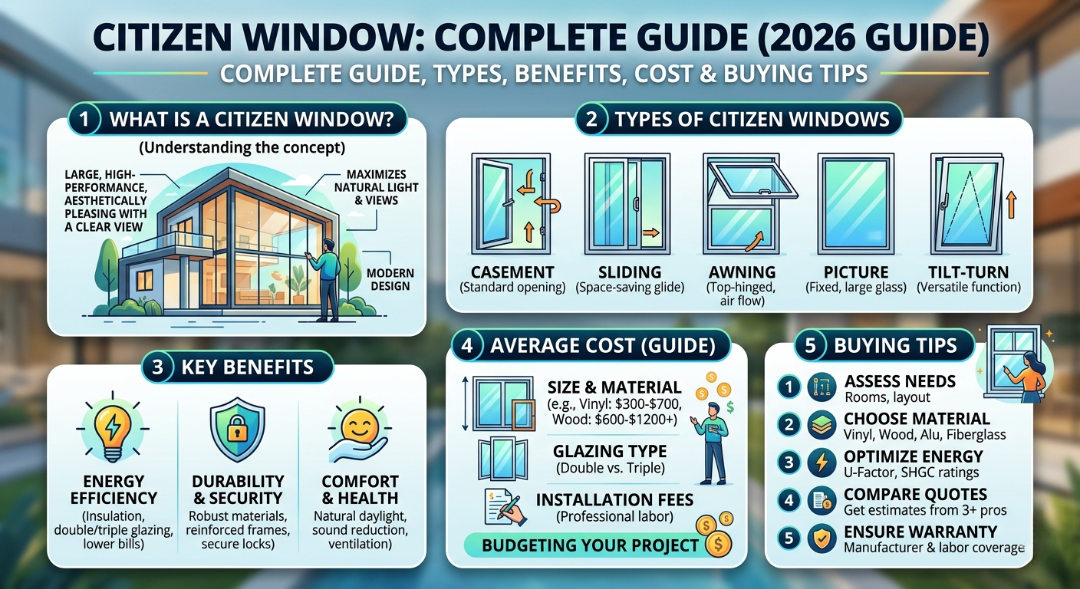
What is a Citizen Window?
A Citizen Window typically refers to a modern, engineered window system designed for urban homes and commercial spaces. The focus is on:
- Strong structural durability
- Thermal and sound insulation
- Weather resistance
- Modern aesthetics
- Low maintenance requirements
In practical terms, Citizen Windows are often built using uPVC, aluminium, or composite materials, making them suitable for different climates and architectural styles.
Unlike traditional wooden windows, these systems are designed to withstand environmental stress such as heat, rain, dust, and pollution while maintaining performance for years.
Key Features of Citizen Window Systems
Citizen Window systems are preferred in modern construction due to their advanced features. Here are the most important ones:
1. Energy Efficiency
These windows help regulate indoor temperature by reducing heat transfer. This leads to lower electricity bills due to reduced reliance on air conditioning and heating systems.
2. Sound Insulation
One of the biggest advantages is noise reduction. Multi-chamber frames and double glazing help block external sounds, making them ideal for urban environments.
3. Weather Resistance
Citizen Windows are built to withstand:
- Heavy rainfall
- Strong sunlight
- High humidity
- Dust storms
4. Enhanced Security
They often come with multi-point locking systems, reinforced frames, and impact-resistant glass options.
5. Aesthetic Flexibility
Available in multiple designs, colors, and finishes, they can match both modern and traditional interiors.
6. Low Maintenance
Unlike wooden frames, these windows do not require frequent polishing or repainting.
Types of Citizen Windows
Citizen Window systems come in various designs depending on functionality and space requirements.
1. Sliding Windows
Sliding windows are perfect for compact spaces. They move horizontally on tracks and are easy to operate.
Best for:
- Apartments
- Balconies
- Kitchens
2. Casement Windows
These windows open outward or inward using hinges and offer excellent ventilation.
Best for:
- Bedrooms
- Living rooms
3. Fixed Windows
These do not open and are used mainly for lighting and architectural aesthetics.
Best for:
- Staircases
- Hallways
- High-rise buildings
4. Tilt and Turn Windows
A versatile European-style design that can tilt for ventilation or fully open for cleaning and airflow.
Best for:
- Modern homes
- Offices
5. Bay Windows
These extend outward from the wall, creating extra interior space and panoramic views.
Best for:
- Luxury homes
- Villas
Materials Used in Citizen Windows
The performance of Citizen Window systems depends heavily on the material used.
1. uPVC (Unplasticized Polyvinyl Chloride)
- Highly durable
- Excellent insulation
- Cost-effective
- Resistant to corrosion and termites
2. Aluminium
- Strong and lightweight
- Slim frames with modern look
- Ideal for large glass panels
- Highly recyclable
3. Wood
- Natural aesthetic appeal
- Good insulation
- Requires regular maintenance
4. Composite Materials
- Combination of materials for enhanced performance
- Balanced strength and insulation
Benefits of Installing Citizen Windows
Installing Citizen Window systems offers multiple long-term advantages.
1. Improved Energy Savings
Better insulation reduces dependency on cooling and heating systems.
2. Increased Property Value
Modern windows enhance the overall appeal and resale value of a property.
3. Better Indoor Comfort
Reduced noise, stable temperature, and improved airflow enhance comfort levels.
4. Long-Term Durability
High-quality materials ensure long lifespan with minimal wear and tear.
5. Eco-Friendly Choice
Energy-efficient windows reduce carbon footprint.
Installation Process of Citizen Windows
Proper installation is crucial for performance and durability.
Step 1: Site Measurement
Accurate measurement of window openings is taken to ensure a perfect fit.
Step 2: Frame Preparation
The window frame is manufactured based on specifications.
Step 3: Removal of Old Windows (if applicable)
Existing windows are carefully dismantled without damaging walls.
Step 4: Frame Installation
The new frame is fixed using screws, anchors, and sealing materials.
Step 5: Glass Fitting
Double or single glazing is installed depending on requirements.
Step 6: Sealing and Finishing
Silicone sealing ensures airtight insulation and water resistance.
Step 7: Final Inspection
Smooth operation, locking, and alignment are tested.
Cost Factors of Citizen Windows
The cost of Citizen Windows varies based on several factors:
1. Material Type
- uPVC: Budget-friendly
- Aluminium: Mid to high range
- Wood: High maintenance cost
2. Glass Type
- Single glazing (cheaper)
- Double glazing (energy-efficient)
- Laminated or tinted glass (premium)
3. Window Design
Sliding windows are generally more affordable than bay or custom designs.
4. Size and Quantity
Larger windows or multiple installations increase total cost.
5. Hardware Quality
Locks, handles, and hinges also affect pricing.
How to Choose the Right Citizen Window
Selecting the right window system requires careful consideration.
1. Identify Your Purpose
Do you need ventilation, security, aesthetics, or insulation?
2. Consider Climate Conditions
- Hot climates: uPVC or insulated aluminium
- Coastal areas: corrosion-resistant materials
3. Focus on Energy Efficiency
Double-glazed windows are ideal for reducing energy costs.
4. Check Build Quality
Always inspect frame thickness, sealing quality, and hardware strength.
5. Compare Installation Providers
Choose experienced installers with strong customer reviews.
Maintenance Tips for Citizen Windows
Even though these systems require low maintenance, basic care ensures longevity.
- Clean frames with mild soap and water
- Avoid harsh chemicals
- Lubricate hinges and locks annually
- Inspect seals for wear and tear
- Clean glass regularly for clarity
Common Mistakes to Avoid
Many homeowners make mistakes while choosing window systems.
1. Choosing Cheap Quality Materials
Low-cost windows often reduce performance and lifespan.
2. Ignoring Installation Quality
Even premium windows fail if installed incorrectly.
3. Overlooking Insulation Needs
Not selecting double glazing in noisy or hot areas can reduce comfort.
4. Poor Size Measurement
Incorrect measurements lead to gaps and air leakage.
Applications of Citizen Windows
Citizen Window systems are widely used in:
- Residential apartments
- Villas and independent houses
- Office buildings
- Hotels and resorts
- Commercial complexes
- Educational institutions
Their versatility makes them suitable for both modern and traditional architecture.
Conclusion
Citizen Window systems represent a modern shift in how buildings are designed for comfort, efficiency, and sustainability. Whether you are constructing a new home or upgrading an existing one, these windows offer a powerful combination of durability, insulation, security, and aesthetics.
From sliding and casement designs to advanced double-glazed systems, they cater to a wide range of architectural needs. By choosing the right material, ensuring professional installation, and following basic maintenance practices, you can enjoy long-lasting performance and improved living comfort.
In today’s fast-paced urban lifestyle, investing in a high-quality Citizen Window system is not just a design choice it’s a smart decision for energy savings, noise reduction, and long-term value.
FAQs About Citizen Window
1. What is a Citizen Window?
A Citizen Window refers to a modern window system designed for durability, insulation, and low maintenance, commonly used in homes and commercial buildings.
2. Are Citizen Windows expensive?
Costs vary based on material, size, and design, but uPVC versions are generally affordable.
3. Which material is best for Citizen Windows?
uPVC is best for insulation and affordability, while aluminium is preferred for strength and modern design.
4. Do Citizen Windows reduce noise?
Yes, especially double-glazed systems, which significantly reduce external noise.
5. How long do Citizen Windows last?
High-quality systems can last 15–30 years with proper maintenance.
6. Are they suitable for hot climates?
Yes, they are designed to reduce heat transfer and improve indoor comfort.
7. Can I install them in old houses?
Yes, they can be customized for renovation projects.
8. Do they require maintenance?
Very minimal maintenance is required compared to wooden windows.