Launching a website is easier than ever, but finding dependable hosting remains one of the most important decisions you’ll make. Whether you’re starting a personal blog, an online store, a portfolio, or a business website, your hosting provider directly impacts website speed, security, uptime, and user experience.
If you’ve been searching for Hosting ProgramGeeks, you’re likely looking for information about hosting services, recommendations, or educational resources related to web hosting. This comprehensive guide explains everything you need to know from the basics of web hosting to advanced features, performance optimization, security practices, and how to select the right hosting plan for your needs.
By the end of this guide, you’ll understand what makes quality hosting valuable and how to make an informed decision that supports your website’s long-term growth.
What Is Hosting ProgramGeeks?
Hosting ProgramGeeks generally refers to resources and information focused on web hosting technologies, hosting recommendations, server management, website performance, and hosting best practices.
Rather than simply recommending hosting providers, the concept emphasizes understanding:
- Different hosting environments
- Performance optimization
- Website security
- Domain management
- Server reliability
- Cost-effective hosting solutions
- Technical hosting knowledge for beginners and professionals
For anyone building an online presence, these topics are essential for making smarter hosting decisions.
Why Choosing the Right Hosting Matters
Your hosting provider does far more than simply store your website files.
A reliable hosting environment affects:
- Website loading speed
- Search engine rankings
- Visitor experience
- Website security
- Conversion rates
- Online reputation
- Business growth
Poor hosting often results in:
- Frequent downtime
- Slow page loading
- Security vulnerabilities
- Lost visitors
- Reduced sales
- Lower SEO performance
Investing in dependable hosting saves time, improves customer satisfaction, and supports long-term website success.
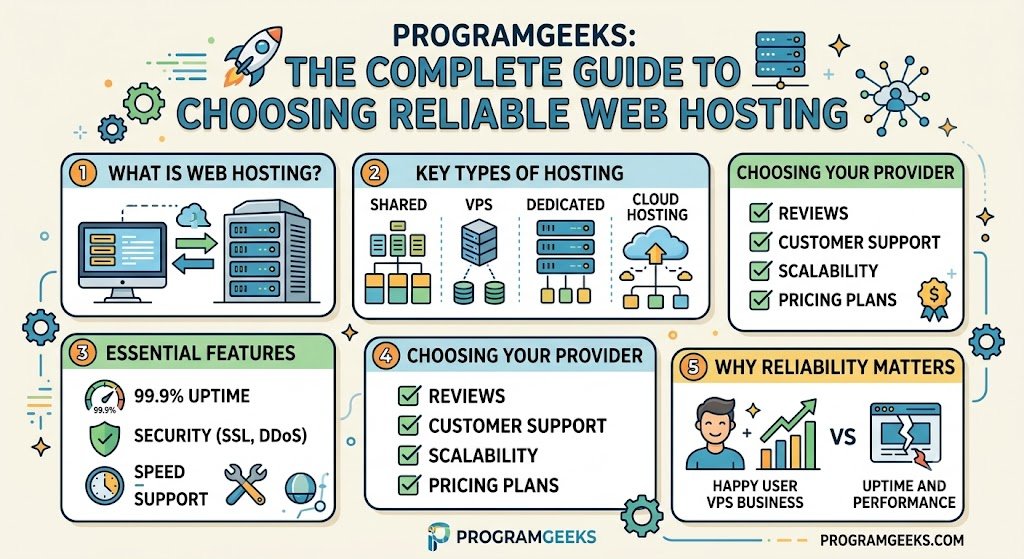
Understanding Different Types of Web Hosting
Before selecting a hosting package, it’s important to understand the available options.
1. Shared Hosting
Shared hosting places multiple websites on a single server.
Best For
- Beginners
- Personal blogs
- Small business websites
- Portfolio sites
Advantages
- Affordable
- Easy setup
- Beginner-friendly
- Minimal maintenance
Limitations
- Shared resources
- Lower performance during traffic spikes
- Limited customization
2. VPS Hosting
Virtual Private Server (VPS) hosting divides a physical server into independent virtual environments.
Best For
- Growing businesses
- Medium-sized websites
- Developers
Advantages
- Better performance
- Dedicated resources
- Increased flexibility
- Greater control
3. Dedicated Server Hosting
With dedicated hosting, one customer uses the entire physical server.
Suitable For
- High-traffic websites
- Large businesses
- Enterprise applications
Benefits
- Maximum performance
- Complete server control
- Enhanced security
- High reliability
4. Cloud Hosting
Cloud hosting distributes your website across multiple servers.
Advantages
- Excellent uptime
- Flexible resource allocation
- High scalability
- Improved reliability
This option has become increasingly popular because it easily adapts to changing traffic demands.
5. Managed WordPress Hosting
Designed specifically for WordPress websites.
Features usually include:
- Automatic updates
- Daily backups
- Enhanced security
- Built-in caching
- Expert WordPress support
This hosting type reduces technical maintenance and allows website owners to focus on creating content.
Essential Features to Look for in Hosting
Choosing hosting based solely on price often leads to disappointment.
Instead, evaluate these important features.
Fast SSD or NVMe Storage
Modern SSD and NVMe drives dramatically improve loading speeds compared to traditional hard drives.
Benefits include:
- Faster database queries
- Improved page speed
- Better user experience
- Stronger SEO performance
High Uptime Guarantee
Aim for hosting with at least:
- 99.9% uptime
- Reliable infrastructure
- Redundant systems
- Network monitoring
Every minute of downtime can result in lost visitors and revenue.
Free SSL Certificate
SSL encrypts visitor data and displays HTTPS in browsers.
Benefits:
- Better security
- Improved SEO
- Customer trust
- Safe online transactions
Daily Backups
Automatic backups protect your website against:
- Human error
- Malware
- Failed updates
- Server issues
Quick restoration minimizes downtime.
Strong Security Protection
Quality hosting should include:
- Malware scanning
- Firewall protection
- DDoS mitigation
- Login protection
- Automatic security updates
Cybersecurity should never be an afterthought.
Responsive Customer Support
Technical problems can occur at any time.
Look for hosting providers offering:
- 24/7 live chat
- Email support
- Ticket system
- Phone support
- Knowledge base
Reliable support reduces stress during emergencies.
Hosting ProgramGeeks Best Practices for Website Performance
Website speed influences both SEO rankings and visitor satisfaction.
Improve performance by following these practices.
Enable Caching
Caching stores frequently accessed files.
Benefits include:
- Faster page loads
- Lower server load
- Better scalability
Use a Content Delivery Network (CDN)
A CDN distributes website content across global servers.
Advantages:
- Faster international loading
- Reduced latency
- Better uptime
- Improved reliability
Optimize Images
Large images slow websites considerably.
Recommended practices:
- Compress images
- Use WebP format
- Lazy load media
- Resize before uploading
Minimize Plugins
Too many plugins increase:
- Server load
- Security risks
- Website complexity
Only install plugins that provide genuine value.
Update Software Regularly
Keep updated:
- CMS
- Themes
- Plugins
- Server software
Updates improve both security and performance.
Hosting ProgramGeeks Security Recommendations
Website security protects your visitors and your reputation.
Essential practices include:
Use Strong Passwords
Avoid predictable passwords.
Use:
- Password managers
- Long passphrases
- Multi-factor authentication
Install Security Monitoring
Continuous monitoring helps detect:
- Malware
- Unauthorized access
- Suspicious activity
- File modifications
Early detection prevents larger problems.
Enable Automatic Updates
Manual updates are often forgotten.
Automatic updates reduce exposure to known vulnerabilities.
Limit Login Attempts
Restrict repeated login attempts to reduce brute-force attacks.
Regular Website Audits
Conduct routine reviews of:
- Broken links
- Security logs
- User permissions
- Installed software
- Performance metrics
Routine maintenance keeps websites healthy.
Common Hosting Mistakes to Avoid
Many website owners unknowingly make poor hosting decisions.
Avoid these mistakes:
Choosing the Cheapest Plan
Low-cost hosting may lack:
- Speed
- Security
- Support
- Scalability
Value matters more than price alone.
Ignoring Scalability
Your website should be able to grow.
Choose hosting that allows easy upgrades without major downtime.
Forgetting Backups
Never assume backups are automatic.
Verify backup frequency and restoration procedures.
Overlooking Customer Support
Technical issues happen unexpectedly.
Excellent support can save hours of troubleshooting.
Ignoring Security Features
Basic hosting without security tools exposes websites to unnecessary risks.
Who Should Consider Hosting ProgramGeeks Resources?
Hosting knowledge benefits almost every type of website owner.
Including:
- Bloggers
- Freelancers
- Students
- Developers
- Small businesses
- Agencies
- Online stores
- Startup founders
- Digital marketers
Even experienced developers benefit from staying informed about modern hosting technologies.
Hosting Checklist Before Buying
Use this checklist before selecting a hosting provider.
✔ 99.9% uptime guarantee
✔ SSD or NVMe storage
✔ Free SSL
✔ Daily backups
✔ 24/7 support
✔ Malware protection
✔ DDoS protection
✔ Easy control panel
✔ Website migration assistance
✔ Transparent pricing
✔ Scalable hosting plans
✔ Positive customer reputation
Conclusion
Choosing the right hosting solution is one of the smartest investments you can make for your website. Fast loading speeds, dependable uptime, strong security, responsive customer support, and scalable infrastructure all contribute to a better experience for both visitors and search engines.
Understanding the principles behind Hosting ProgramGeeks helps you move beyond marketing claims and evaluate hosting providers based on meaningful criteria. Whether you’re launching your first website or managing a growing online business, prioritizing performance, reliability, and security will pay dividends over time.
Before making a decision, compare hosting plans carefully, identify your website’s current and future needs, and ensure your chosen provider offers the flexibility to grow with your project. A well-informed hosting choice creates a solid foundation for long-term online success.
Frequently Asked Questions
What is Hosting ProgramGeeks?
Hosting ProgramGeeks refers to educational resources, guides, and information focused on web hosting, server technologies, website optimization, and selecting reliable hosting solutions.
Is shared hosting good for beginners?
Yes.
Shared hosting is affordable, simple to manage, and ideal for blogs, portfolios, and small business websites.
Which hosting type offers the best performance?
Dedicated servers generally provide the highest performance, while cloud hosting offers an excellent balance of speed, scalability, and reliability for most growing websites.
Why is uptime important?
Higher uptime means your website remains accessible to visitors, improving user experience, SEO performance, and business credibility.
How often should website backups be created?
Daily automated backups are recommended. Mission-critical websites may require more frequent backups depending on update frequency.
Does hosting affect SEO?
Yes.
Hosting influences page speed, uptime, security, and overall user experience all of which can impact search engine rankings.
Can I upgrade my hosting later?
Most reputable hosting providers allow seamless upgrades from shared hosting to VPS, cloud, or dedicated servers as your website grows.